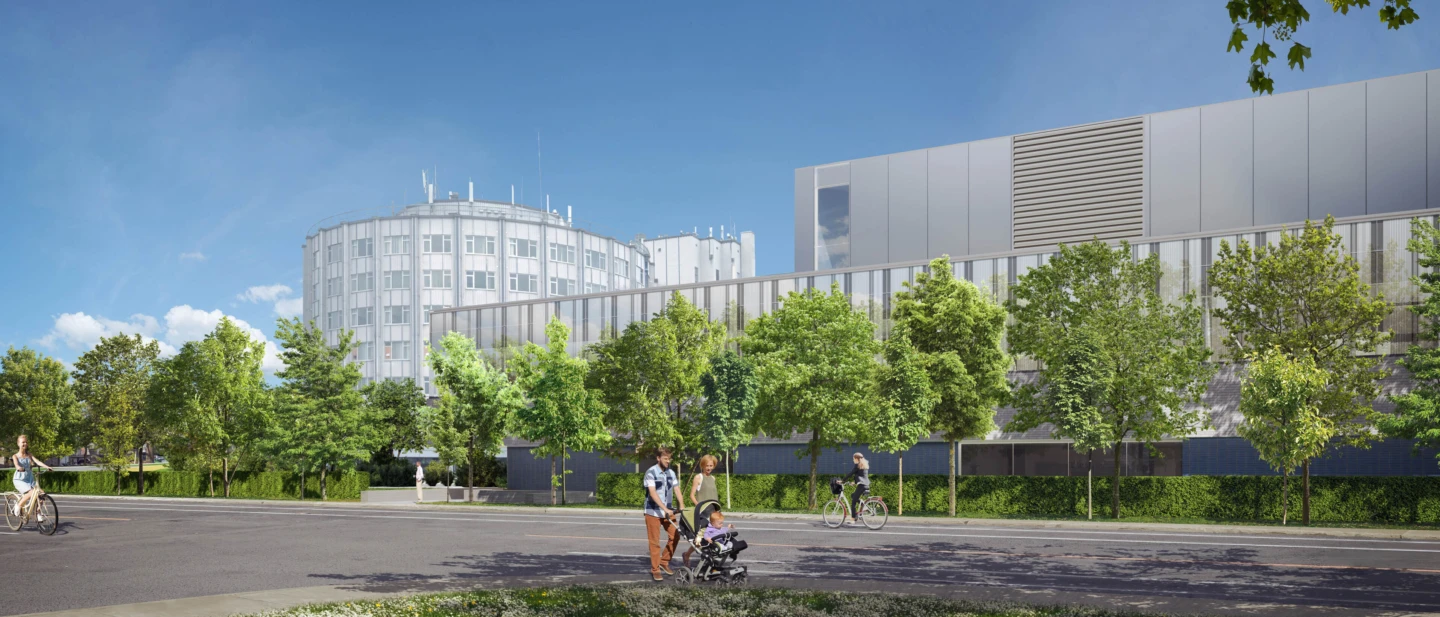
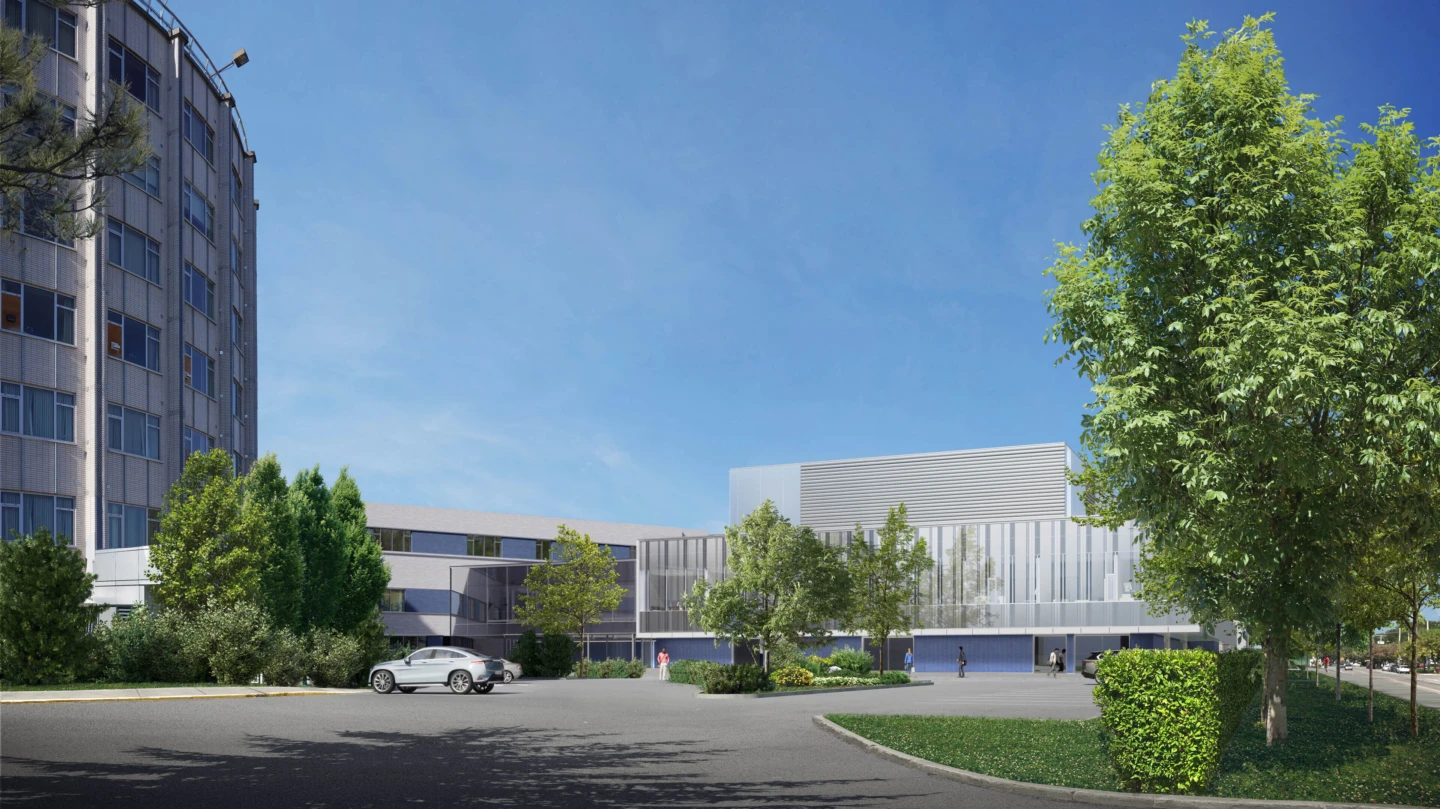
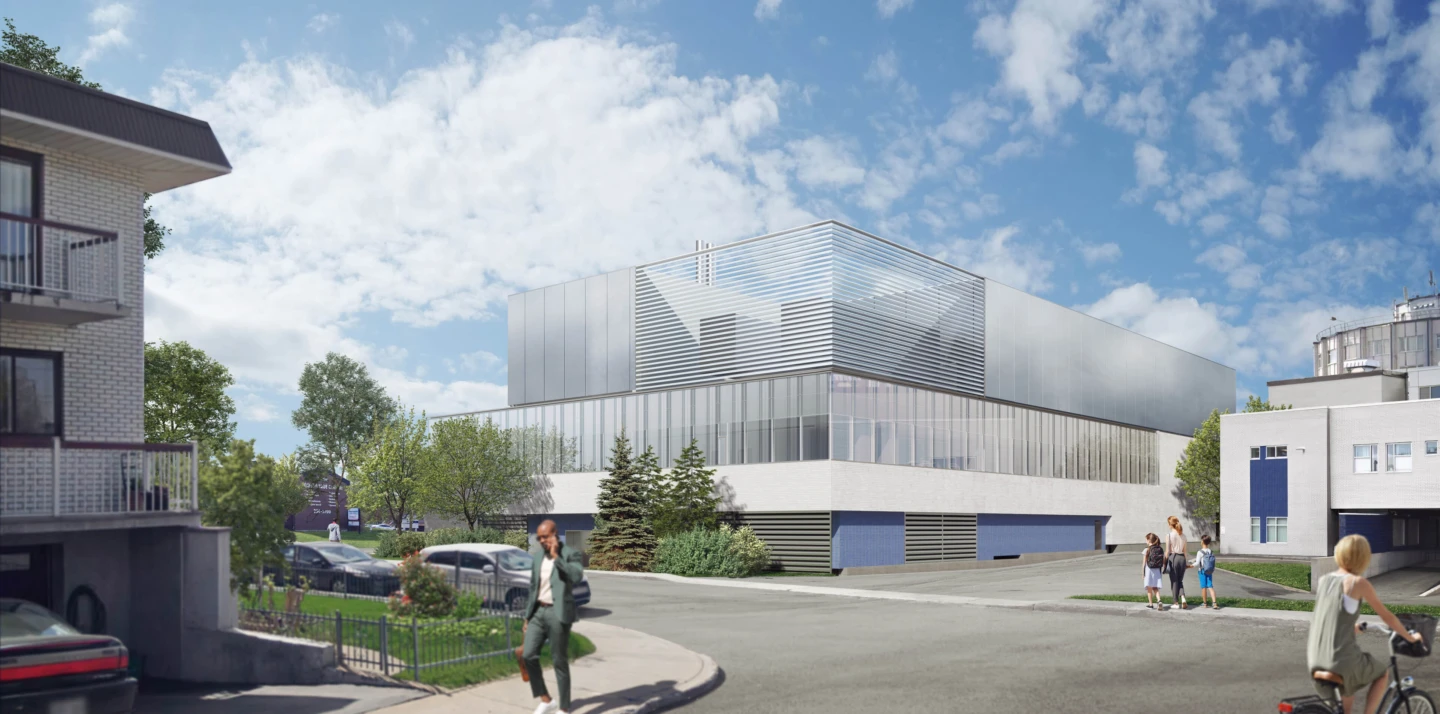
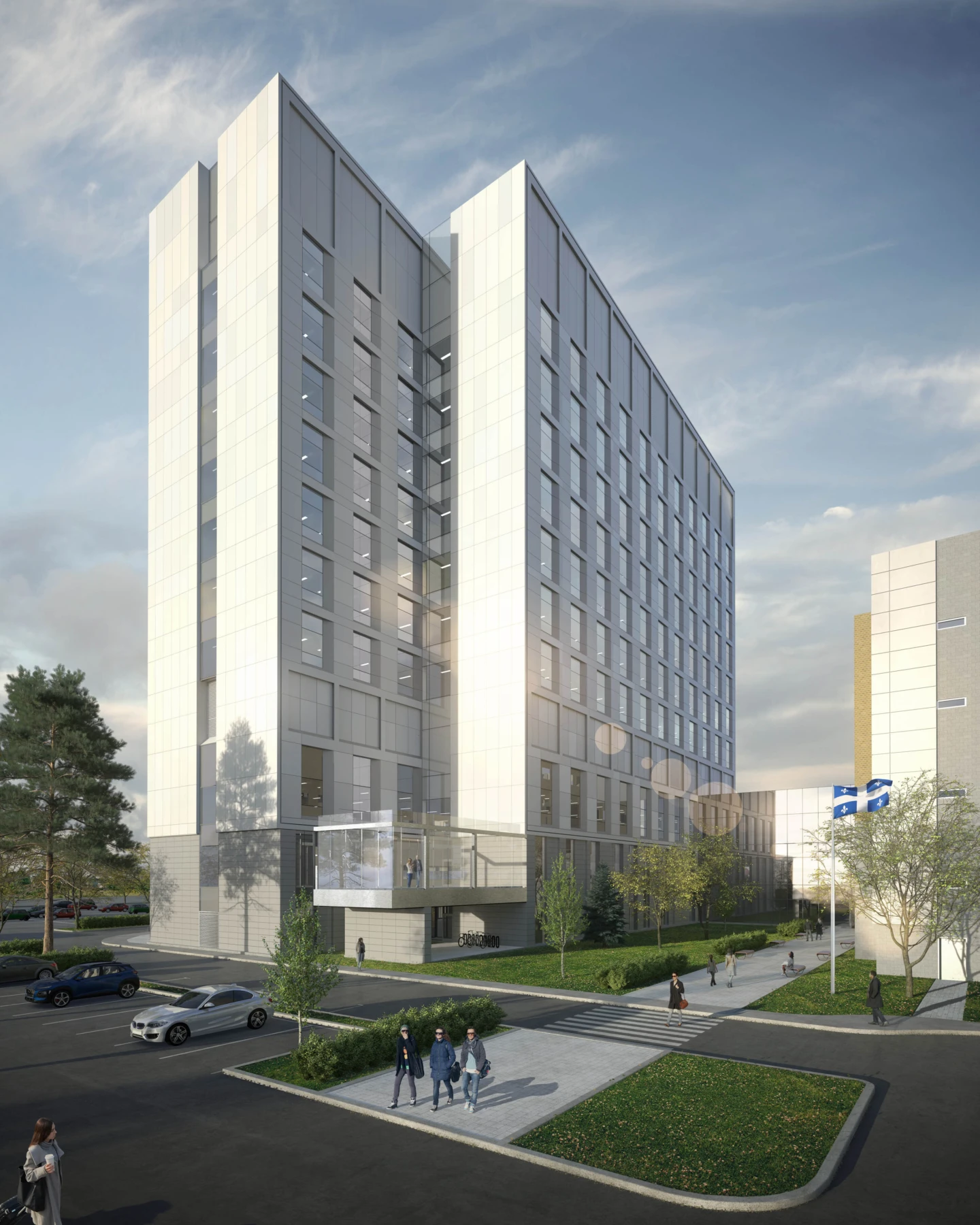
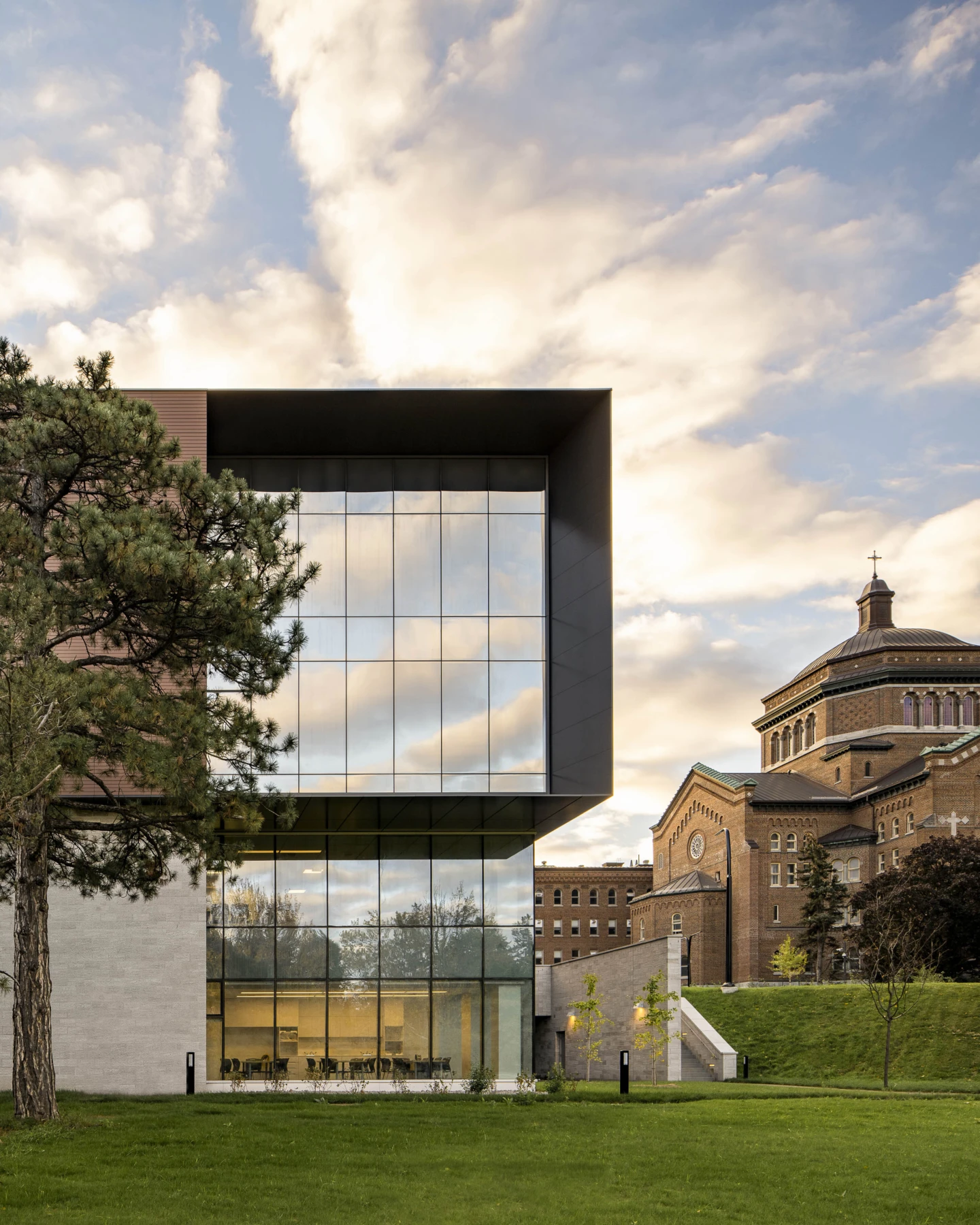
Santa Cabrini holds a unique place in Montréal: the hospital maintains strong historical ties with the Italian community, which is highly present in the metropolis and in the neighbourhood surrounding the complex. The site is also defined by a distinctive morphology: a central front courtyard building in the shape of a rotunda housing care units, followed by several clinical wings, as well as an emergency department built in the 1990s on the east side of the site. At the urban scale, the complex is set within a sensitive residential fabric—semi-detached and single-family homes—where neighbourly relationships, community connections, and volumetric expression are key considerations.
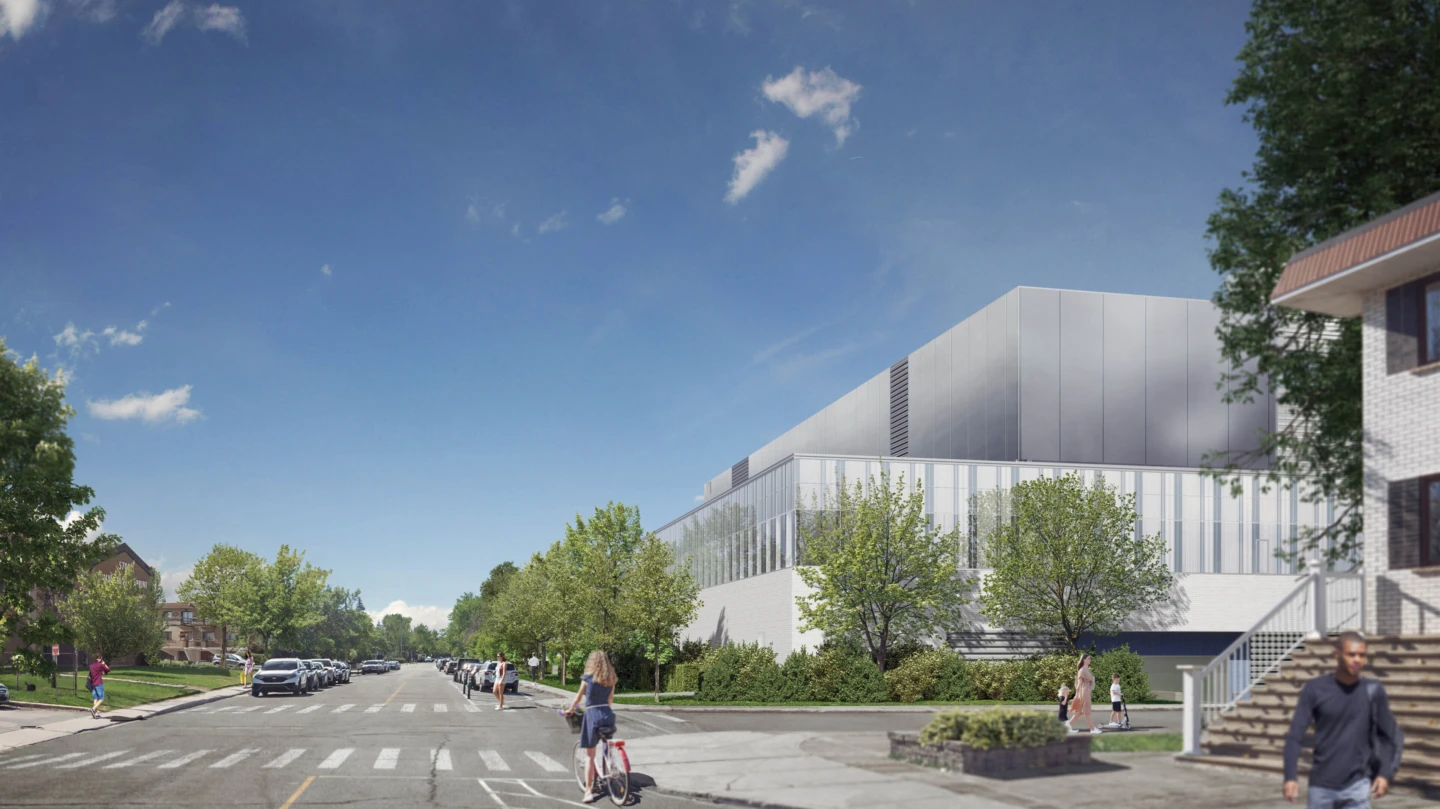
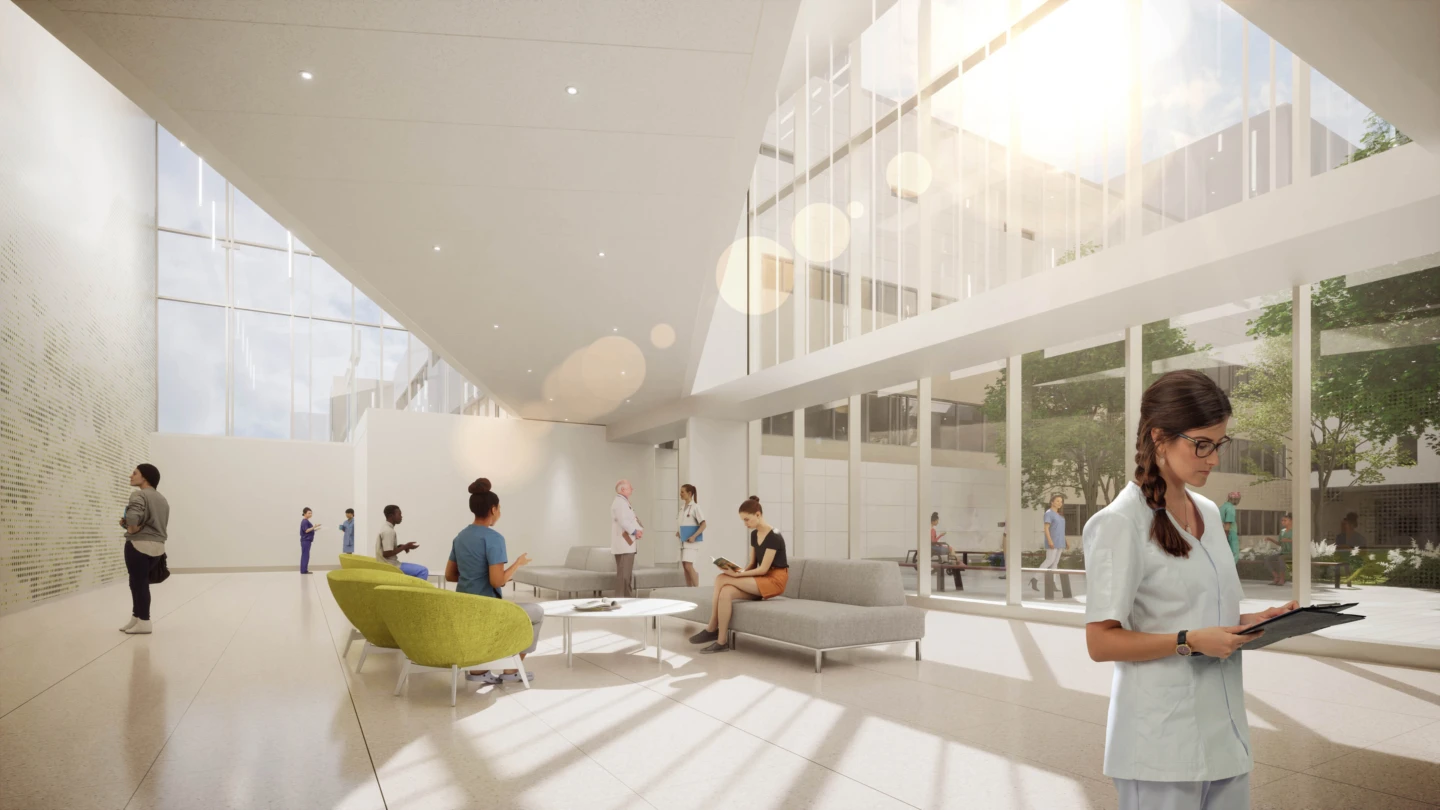
This cultural context informed the design approach in a deliberately subtle way. For example, inspiration was drawn from the stained glass windows of the existing chapel—not as a literal reference, but as an idea of filtered, modulated, living light. The project is thus wrapped in a continuous glass envelope composed of triple glazing, two layers of which feature digital printing. This system was developed in collaboration with Montréal artist Michel-Pierre Lachance, recognized for his geometrically driven work of great formal sensitivity. It acts as a dynamic light filter, allowing outward views while modulating direct sunlight and protecting privacy.
Beyond the work on transparency and light, the project’s integration into its context is also expressed through a fundamental material dimension. The existing hospital stands out for its distinctive combination of two glazed bricks—one light-toned, the other slightly bluish—arranged in a characteristic pattern that strongly contributes to its architectural identity. The material palette of the expansion draws directly from this contextual reality, reinterpreted in a contemporary manner and selected with precision. Rather than a literal reproduction, the approach establishes a subtle dialogue with the existing building, resulting in an addition that is at once sensitive, integrated, and resolutely contemporary.
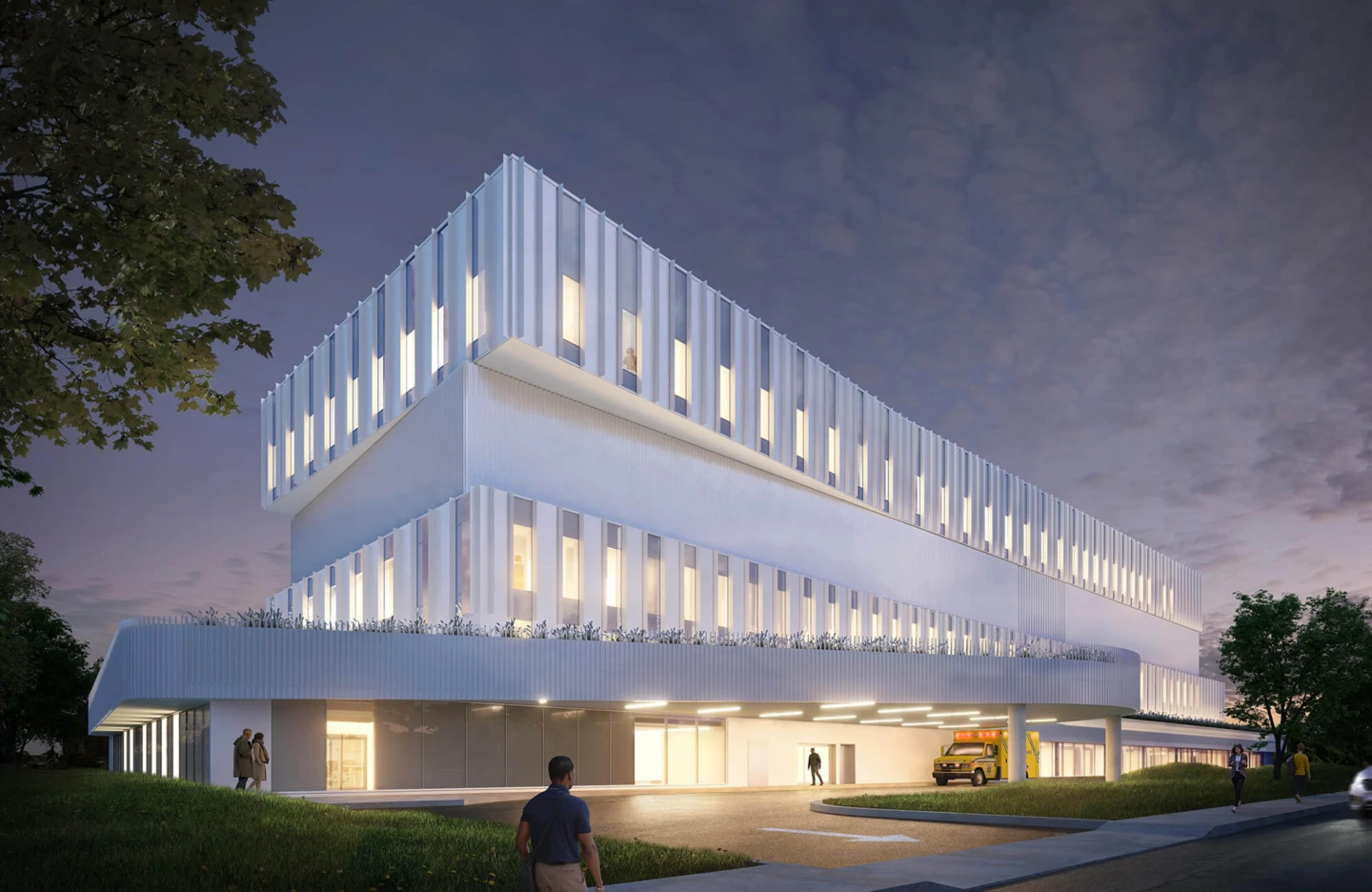
The building was positioned to ensure the most direct and efficient flows possible. The operating suite is located on the first level, in immediate connection with the emergency department, and sits directly above the MDRU installed below. This vertical stacking ensures efficient circulation of medical devices between sterilization and the operating rooms. The siting also takes advantage of its proximity to existing loading docks. A ground-floor logistics bridge between the expansion and the supply sector in the existing building enables the efficient delivery of the significant volumes of materials required for the operating suite and sterilization services.
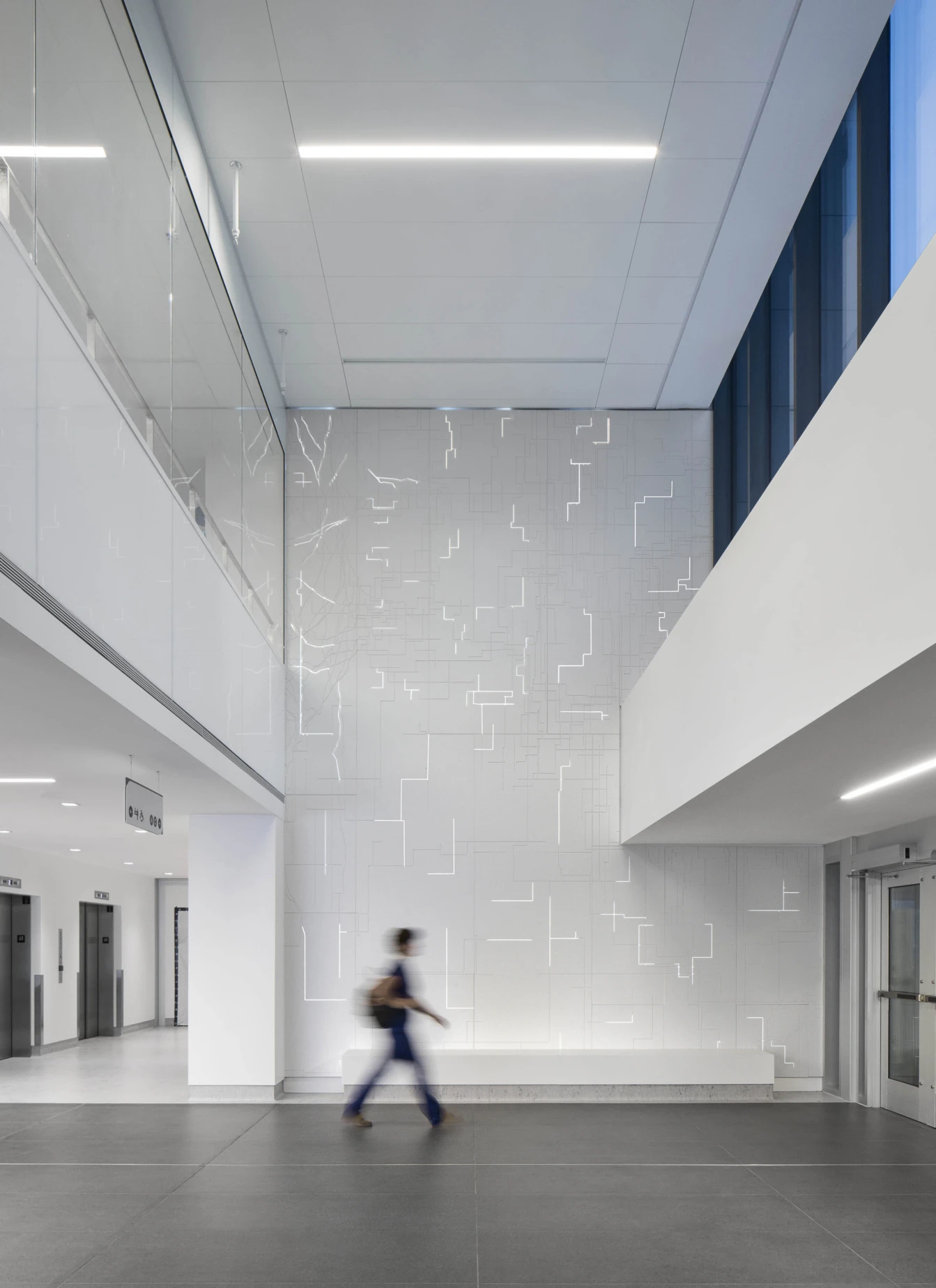
From an experiential standpoint, the architecture introduces environmental qualities rarely associated with highly technical spaces. The patient-accessible floor is wrapped in a continuous glass envelope, with very tall window openings that allow natural light to penetrate deep into the interior spaces. The project also integrates artworks into the architecture, offering patients and their loved ones a connection to culture at a sensitive moment, while contributing to a more humane environment for staff.